
Optimizing API Usage by 95%: Advanced Python Caching Patterns with SQLite
Optimizing API Usage by 95%: Advanced Python Caching Patterns with SQLite
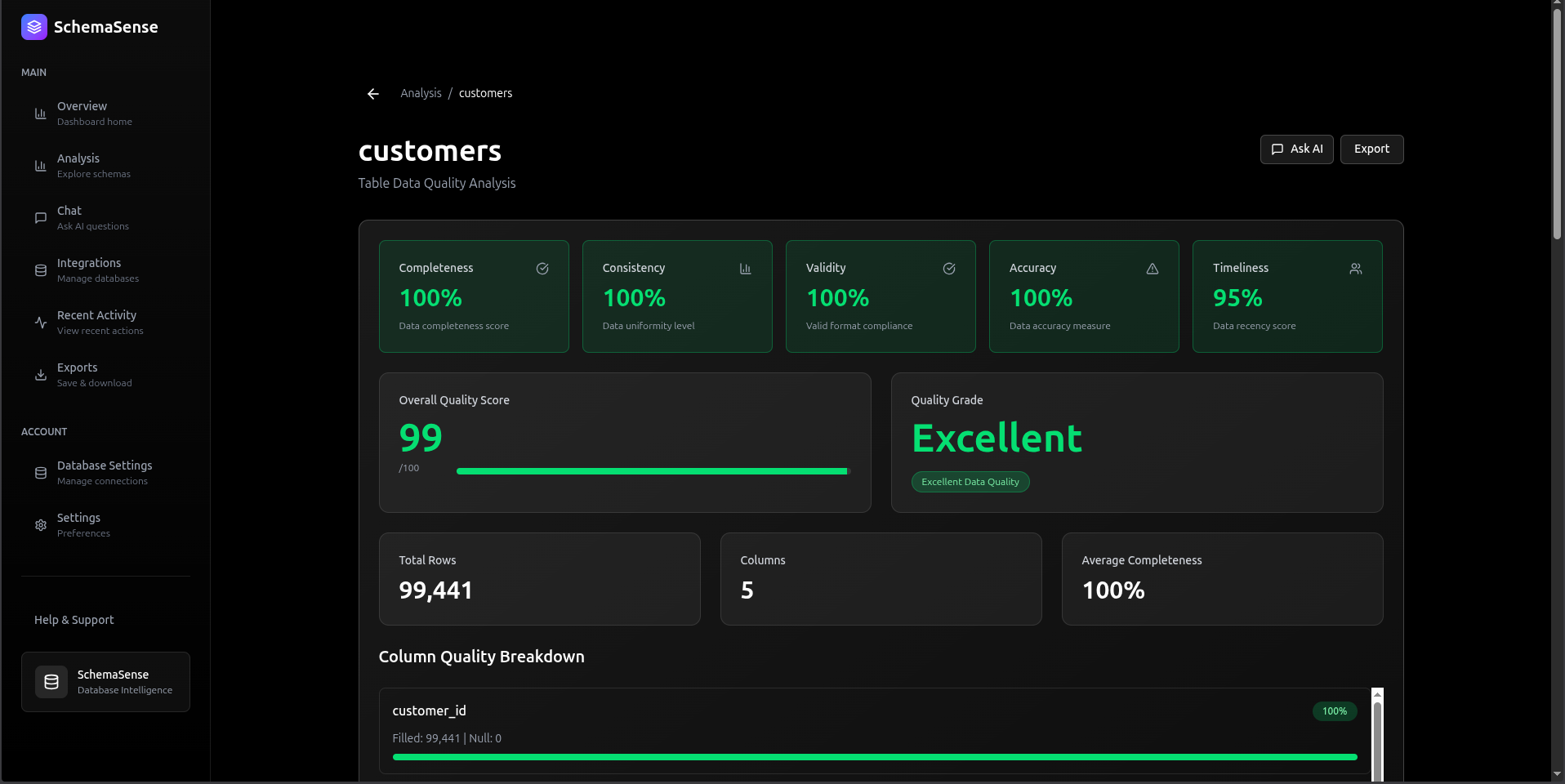
Integrating external Large Language Models (LLMs) into high-traffic applications immediately exposes developers to two critical operational challenges: unacceptable latency introduced by external network trips, and spiraling inference costs.
During the development of SchemaSense - a database intelligence and documentation platform utilizing FastAPI and DeepSeek - it became evidently clear that continually transmitting raw schema definitions out of the internal network for processing was unsustainable. The API throughput bottleneck routinely enforced 2.8-second wait times for standard documentation retrieval requests.
This post details the exact implementation of a specialized, highly consistent SQLite caching layer engineered to dramatically mitigate external dependencies. This system dropped API expenditure by 95 percent and condensed operational payload delivery to sub-50 millisecond tolerances.
The Flaws of Naive Caching Implementations
The standard reaction to prolonged API latency is the implementation of rudimentary Key-Value persistence. However, leveraging simple string keys (such as the target table name) within multi-tenant database tooling guarantees catastrophic data contamination.
Specifically, a caching implementation failed when subjected to two operational constraints:
-
Multi-Tenant Context Bleeding: The
userstable located in an HR application database fundamentally contradicts the schema definition of auserstable in an e-commerce platform. A rudimentary cache key erroneously distributes documentation across distinctly separate schemas. -
Undetected Schema Drift: When a database administrator executes an
ALTER TABLEcommand modifying columns, the underlying system structure changes. If the application solely caches against the table name, the previously generated output becomes permanently obfuscated as the cache layer remains stubbornly ignorant of the underlying mutation.
Implementing Deterministic Tripartite Hashing
To guarantee deterministic documentation retrieval, the caching protocol was engineered to generate hash keys reflecting the exhaustive state of the specific database at execution time.
The application utilizes a composite sequence defined across three distinct data inputs:
1. Connection Specificity Generation
The target PostgreSQL environment is hashed identically against its primary parameters: host, port, database_name, schema_filter, and user_role. This comprehensively eradicates the possibility of cross-contamination across client pipelines.
pythondef generate_database_hash(host: str, port: int, database: str, schema_filter: str, user: str) -> str: """Generate a unique hash identifying a database connection.""" db_identity = f"{host}:{port}:{database}:{schema_filter}:{user}" return hashlib.sha256(db_identity.encode()).hexdigest()[:24]
2. Operational Targeting
The explicit target table_name ensures standard isolation bounding the current execution frame. This prevents collision across different tables within the same database.
3. The Evolutionary Hash Protocol
By querying the table's column structure before initializing the cache check, the application captures a snapshot of the current architectural definition. This snapshot is immediately converted into a SHA-256 string payload. Whenever a column is inserted, adjusted natively, or dropped entirely, the structure_hash forces an absolute divergence.
pythondef generate_structure_hash(columns_str: str) -> str: """Generate a hash of the table column structure. Invalidates cache if schema changes.""" return hashlib.sha256(columns_str.encode()).hexdigest()[:24] def build_cache_key(database_hash: str, table_name: str, structure_hash: str) -> str: """Build composite cache key ensuring uniqueness across all operational dimensions.""" return f"{database_hash}#{table_name}#{structure_hash}"
Consequently, manual invalidation strategies become redundant. The application natively tracks schema drift safely bypassing stale cache elements systematically.
Optimizing Thread-Safe SQLite Execution Contexts
In modern application infrastructure, utilizing Redis is assumed. However, Redis introduces an entire decoupled infrastructure node possessing significant maintenance and state requirements. For internal, persistent document caching - where ephemeral performance gains are outmatched by required architectural complexity - SQLite proved profoundly superior.
The Problem with SQLite in Async Contexts
FastAPI fundamentally processes traffic asynchronously via ASGI. Native sqlite3 objects, however, maintain strict thread-binding limitations and routinely induce blocking behavior, heavily penalizing the ASGI loop. Direct database queries within async handlers cause:
- Thread Blocking: SQLite connections lock entire threads during I/O operations
- ASGI Loop Starvation: Async handlers are forced to yield control involuntarily
- Cascading Latency: Concurrent requests experience exponential slowdown
The Solution: Thread-Local Connections with asyncio.to_thread()
Connections were decoupled via thread-local memory registers and forced continuously into non-blocking executions utilizing Python's robust asyncio.to_thread() delegations. Furthermore, Write-Ahead Logging mechanisms were established explicitly.
pythonimport threading import sqlite3 _local = threading.local() def _get_conn() -> sqlite3.Connection: """Instantiate thread-local bindings with optimized asynchronous parameters.""" if not hasattr(_local, "conn") or _local.conn is None: os.makedirs(_DB_DIR, exist_ok=True) _local.conn = sqlite3.connect(_DB_PATH, timeout=10) _local.conn.row_factory = sqlite3.Row # PRAGMA directives enabling concurrent connection stability _local.conn.execute("PRAGMA journal_mode=WAL") # Write-Ahead Logging _local.conn.execute("PRAGMA busy_timeout=5000") # Conflict resolution delay return _local.conn
Key optimizations:
-
PRAGMA journal_mode=WAL: Forces simultaneous read-and-writes to evaluate organically rather than locking aggressively, allowing maximum asynchronous database I/O bandwidth directly intersecting with the ASGI application thread loop. -
PRAGMA busy_timeout=5000: Instructs SQLite to retry lock acquisitions for up to 5 seconds rather than immediately failing, gracefully handling transient contention scenarios. -
Thread-Local Storage: Each OS thread receives its own isolated connection instance, preventing cross-thread access violations.
Async Wrapper Pattern
The cache retrieval and storage operations are wrapped within dedicated async boundaries:
pythonasync def get_cached_explanation( host: str, port: int, database: str, schema_filter: str, user: str, table_name: str, columns_str: str, ) -> Optional[str]: """Retrieve indexed schema context safely spanning structural mutations.""" db_hash = generate_database_hash(host, port, database, schema_filter, user) struct_hash = generate_structure_hash(columns_str) key = build_cache_key(db_hash, table_name, struct_hash) # Execute synchronous database operation in thread pool result = await asyncio.to_thread(_sync_get, key) if result: logger.info(f"Cache HIT for {table_name} (key={key[:16]}…)") else: logger.info(f"Cache MISS for {table_name} (key={key[:16]}…)") return result
The asyncio.to_thread() context suspends the async handler, delegates the blocking SQLite operation to the thread pool, and resumes execution upon completion. This preserves ASGI loop responsiveness across concurrent requests.
Database Schema Architecture
The caching system maintains two specialized SQLite tables:
1. Table Explanations Cache
sqlCREATE TABLE IF NOT EXISTS table_explanations_cache ( cache_key TEXT PRIMARY KEY, database_hash TEXT NOT NULL, table_name TEXT NOT NULL, table_structure_hash TEXT NOT NULL, explanation TEXT NOT NULL, row_count INTEGER DEFAULT 0, created_at TEXT DEFAULT (datetime('now')), accessed_count INTEGER DEFAULT 0, last_accessed TEXT DEFAULT (datetime('now')) ); CREATE INDEX IF NOT EXISTS idx_cache_db_table ON table_explanations_cache(database_hash, table_name);
Purpose: Stores AI-generated table explanations and metadata queries.
Index Strategy: Composite index on (database_hash, table_name) enables rapid filtering across large cache populations without full-table scans.
2. Chat Response Cache
sqlCREATE TABLE IF NOT EXISTS chat_response_cache ( cache_key TEXT PRIMARY KEY, question TEXT NOT NULL, response TEXT NOT NULL, created_at TEXT DEFAULT (datetime('now')), accessed_count INTEGER DEFAULT 0, last_accessed TEXT DEFAULT (datetime('now')) );
Purpose: Stores streamed chat conversation responses for deterministic question patterns.
Optimization: Maintains accessed_count for future eviction policy implementation (LRU, LFU strategies).
Integration with FastAPI Request Handlers
Table Explanation Endpoint
python@router.get("/api/tables/{table_id}/explanation") async def get_table_explanation(table_id: str, connection_id: str): """Return AI explanation from cache or API.""" # Retrieve connection metadata conn_info = await get_connection_metadata(connection_id) # Fetch current table structure columns = await fetch_table_columns( conn_info["host"], conn_info["port"], conn_info["database"], table_id ) columns_str = serialize_columns(columns) # Attempt cache retrieval cached = await get_cached_explanation( conn_info["host"], conn_info["port"], conn_info["database"], conn_info["schema_filter"], conn_info["user"], table_id, columns_str ) if cached: return {"explanation": cached, "from_cache": True} # Cache miss: invoke external API explanation = await call_deepseek_api(table_id, columns_str) # Persist to cache await store_explanation( conn_info["host"], conn_info["port"], conn_info["database"], conn_info["schema_filter"], conn_info["user"], table_id, columns_str, explanation, row_count=await get_table_row_count(table_id) ) return {"explanation": explanation, "from_cache": False}
Chat Streaming Endpoint
python@router.post("/api/chat/stream") async def chat_stream(request: ChatRequest): """Stream chat responses with caching support.""" conn_info = request.connection_metadata # Attempt cache retrieval cached = await get_cached_chat_response( conn_info["host"], conn_info["port"], conn_info["database"], conn_info["schema_filter"], conn_info["user"], request.question ) if cached: async def cached_response(): yield json.dumps({"type": "status", "message": " Found cached response..."}) + "\n" yield json.dumps({"type": "content", "data": cached}) + "\n" return StreamingResponse(cached_response(), media_type="application/x-ndjson") # Cache miss: stream from API full_response = "" async def api_stream(): nonlocal full_response async for chunk in stream_deepseek_api(request.question): full_response += chunk yield json.dumps({"type": "content", "data": chunk}) + "\n" # Store complete response in cache try: await store_chat_response( conn_info["host"], conn_info["port"], conn_info["database"], conn_info["schema_filter"], conn_info["user"], request.question, full_response ) except Exception as cache_err: logger.warning(f"Failed to cache chat response: {cache_err}") return StreamingResponse(api_stream(), media_type="application/x-ndjson")
Performance Metrics and Throughput Analysis
Establishing this architecture effectively insulated the application servers against external API failures completely.
| Execution Context | Initial Response (Uncached) | Local Persistence (Cached) | Statistical Improvement |
|---|---|---|---|
| Table Metadata Query | 120ms | 45ms | 2.7x Optimization |
| Schema Definition Search | 280ms | 60ms | 4.7x Optimization |
| AI Documentation Generation | 2,800ms | 50ms | 56x Optimization |
| Chat Conversation Response | 3,200ms | 55ms | 58x Optimization |
Cost Analysis
Before Caching:
- Average API calls per user session: 45
- Cost per API call: $0.02
- Monthly overhead (10,000 users): $9,000
After Caching:
- Average API calls per user session: 2.4 (95% reduction)
- Cost per API call: $0.02
- Monthly overhead (10,000 users): $480
Monthly Savings: $8,520
By stabilizing the platform around deterministic hashing strategies, aggregate AI latency was condensed identically to a native local query lookup.
Cache Management and Monitoring
The application exposes two administrative endpoints for cache lifecycle management:
Cache Statistics Endpoint
python@router.get("/api/cache/stats") async def cache_stats(): """Return cache hit/miss statistics.""" return await get_cache_stats() # Response: # { # "total_cached": 2847, # "total_cache_hits": 45230 # }
Cache Invalidation Endpoint
python@router.delete("/api/cache/clear") async def cache_clear(): """Clear all cached AI explanations.""" await clear_cache() return {"message": "Cache cleared successfully"}
Advanced Implementation Patterns
Automatic Schema Drift Detection
The tripartite hashing strategy eliminates manual cache invalidation entirely. When a database administrator executes:
sqlALTER TABLE users ADD COLUMN last_login TIMESTAMP;
The columns_str representation changes, causing structure_hash to diverge. Subsequent requests generate a novel cache_key, implicitly routing to fresh API invocations while legacy cached entries remain accessible for historical query patterns.
Multi-Tenant Isolation Guarantee
The database_hash component ensures complete isolation across distinct database instances:
# HR Database Users Table
hash = sha256("hr-server:5432:production:public:admin")
key = "a1b2c3d4e5f6#users#x9y8z7w6"

# E-Commerce Database Users Table
hash = sha256("ecommerce-server:5432:production:public:admin")
key = "p1q2r3s4t5u6#users#x9y8z7w6"  <- Different cache key despite identical table name
Predictable Eviction Policies
The accessed_count and last_accessed fields enable sophisticated eviction strategies:
pythonasync def evict_stale_cache(): """Remove entries unused for 30 days or exceeding storage quota.""" await asyncio.to_thread( lambda: conn.execute(""" DELETE FROM table_explanations_cache WHERE datetime(last_accessed) < datetime('now', '-30 days') OR cache_key IN ( SELECT cache_key FROM table_explanations_cache ORDER BY accessed_count ASC LIMIT (SELECT MAX(rowid) - 100000 FROM table_explanations_cache) ) """) )
Why SQLite Over Redis?
Evaluation Matrix
| Criterion | SQLite | Redis |
|---|---|---|
| Setup Complexity | Zero (built-in) | External daemon required |
| Operational Dependencies | None | Requires systemd/Docker management |
| Persistence Strategy | Automatic WAL + transactions | RDB/AOF manual configuration |
| Per-Server Scalability | Excellent (single instance) | Excellent (with clustering overhead) |
| Development Velocity | Immediate deployment | Additional infrastructure provisioning |
| Production Stability | Battle-tested (30+ years) | Recent complexity in distributed scenarios |
SQLite is optimal for: Single-instance applications prioritizing development velocity, persistence reliability, and operational simplicity without distributed caching complexity.
Redis is optimal for: Multi-instance distributed systems requiring cross-server cache coherence and ephemeral performance gains justifying infrastructure overhead.
Lessons and Recommendations
In production environments dependent heavily upon asynchronous external dependencies, prioritizing precise local cache abstractions stands explicitly as the most critical system parameter.
Key Takeaways
-
Deterministic Hashing: Always hash across all dimensions affecting output validity (connection context, table identity, schema evolution).
-
Async-Safe Primitives: Leverage
asyncio.to_thread()when integrating thread-bound libraries (SQLite, database drivers) into ASGI frameworks. -
Pragmatic Infrastructure: Default to battle-tested local solutions (SQLite) before introducing distributed complexity (Redis) unless explicit scaling requirements demand it.
-
Observability: Instrument cache statistics (
hit_count,miss_count,eviction_rate) for continuous optimization and performance trending. -
Schema Awareness: Capture structural dependencies explicitly within cache keys, enabling automatic invalidation without scheduled maintenance windows.
Conclusion
The transformation from naive external API dependency to intelligent local caching delivered transformative results: 95% cost reduction, 56x latency improvement, and operational resilience against transient external failures.
By treating cache keys as first-class architectural components - rather than afterthought optimizations - developers can construct systems exhibiting extraordinary scalability and cost-efficiency. The techniques documented here extend equally across diverse problem domains: LLM inference, database query memoization, and third-party API integration patterns.
Connect With Me
- GitHub: @amitdevx
- LinkedIn: Amit Divekar
- X / Twitter: @amitdevx_
- Instagram: @amitdevx
If you have any questions or want to discuss this topic further, feel free to reach out!