
The $650 Billion Bubble: Why AI Data Centers Are Falling Apart
The $650 Billion Bubble: Why AI Data Centers Are Falling Apart
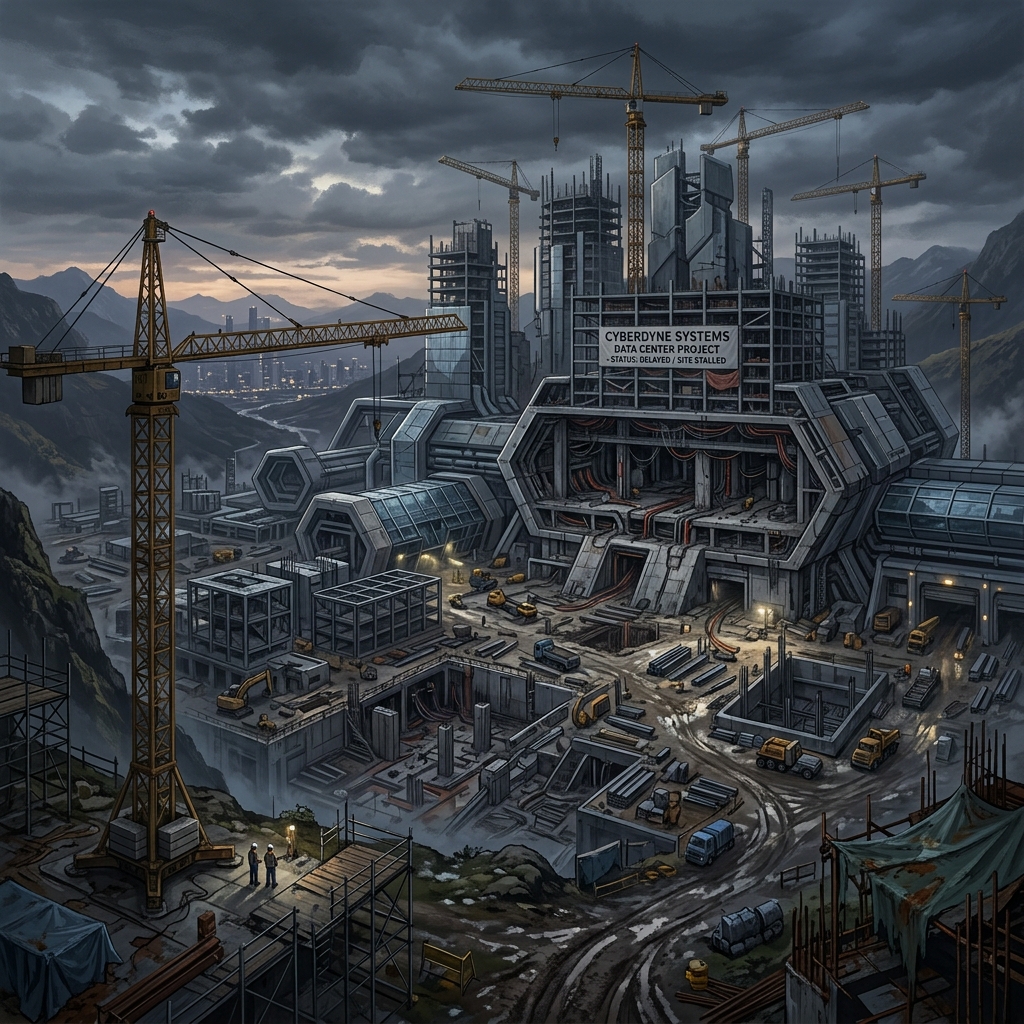
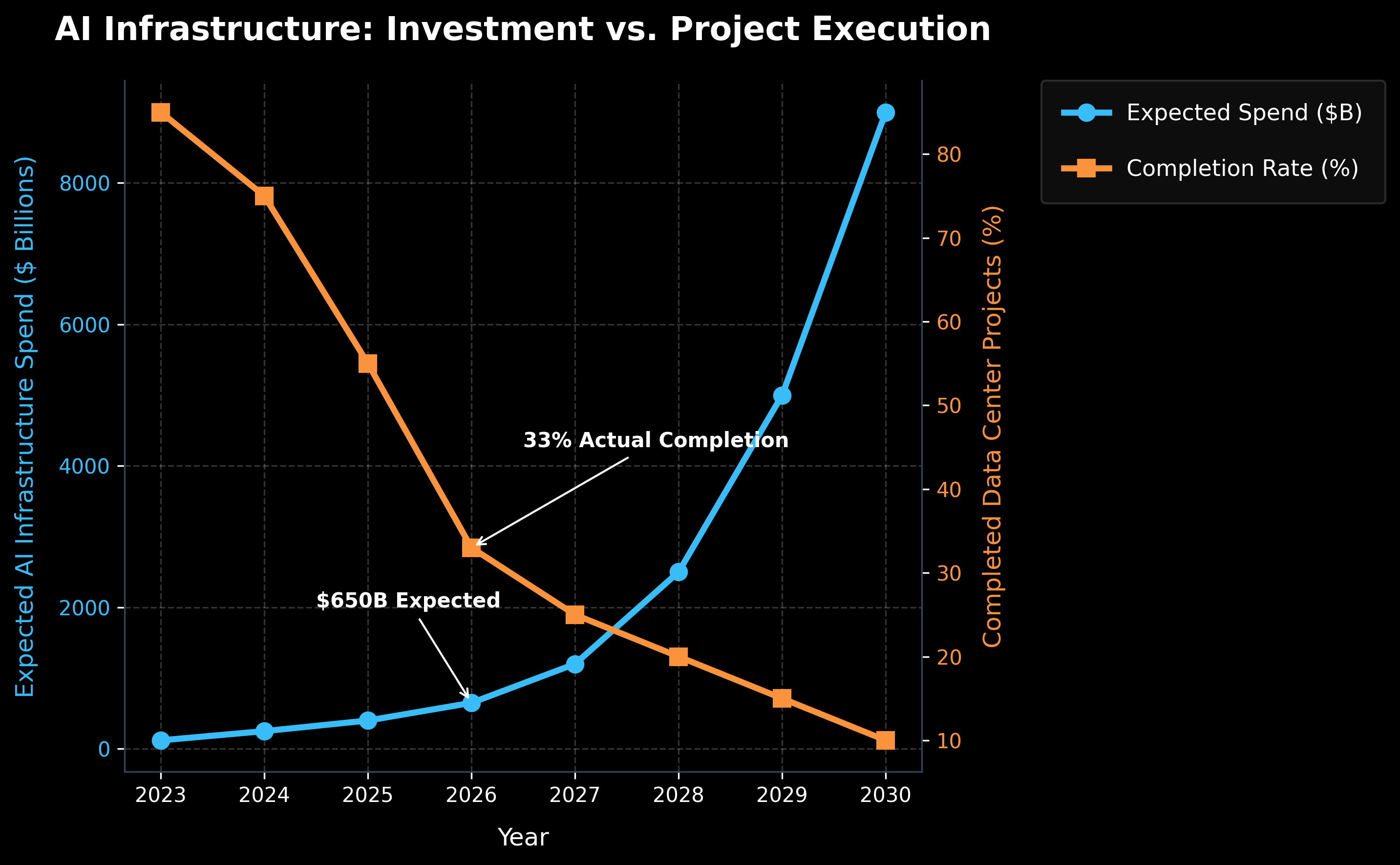
$650 billion. That is the amount four tech companies are expected to spend in 2026 alone for new data centers. To put $650 billion into perspective, if you stacked that amount in $100 bills, the pile would rise 710 kilometers, clearing the orbit of the International Space Station by over 300 kilometers. The plan is to push this number up to a staggering $9 trillion by 2030.
And yet, with so much money allocated to this effort, nearly half of the data centers planned to open in the US this year have already been delayed or cancelled outright. According to recent reports, roughly 140 data center projects representing 12 gigawatts of computing power were supposed to open in the US this year. That is enough energy to power 9 million homes.
But there is a glaring problem. So far, only a third of them are actually being built. The rest exist entirely on paper, in press releases, and in optimistic announcements. Facilities that are under construction face major delays, even if the companies involved deny it. It is one of the strangest disconnects in recent tech history. Beyond just completion issues, the general public is pushing back hard. Between infrasound noise causing health issues, polluted water, rising energy costs, and myriad other problems, communities have had enough.
If the world is spending unprecedented sums of money on AI infrastructure, how is it possible that the infrastructure itself is falling apart before it even gets built? Is this the sign of a bubble that many have been predicting? Let us look at what is really happening behind the scenes.
The Frenzied AI Buildout
When the AI boom exploded into public consciousness in late 2022, the race to build the underlying infrastructure became frenzied. Data centers transformed into the hottest asset class on the planet. Investors poured capital in, and local governments competed fiercely for the projects.
Last year, it was estimated that 92% of US GDP growth came directly from data center spending. If you removed AI infrastructure, the rest of the economy grew by a mere 0.1%. The pitch was straightforward: AI gets smarter with more computing power, and computing power comes from data centers. Therefore, the imperative was to build data centers as fast as possible.
In the US alone, the number of AI data centers went from essentially zero a decade ago to between 4,000 and 5,400 today. The pace of this buildout has been so violent that more money has been committed to data centers in the last six years than was given to the Marshall Plan, the Manhattan Project, the entire Apollo program, and the International Space Station combined, with $120 billion left over.
All of this spending is supporting a business plan that remains largely unproven. Hardware rapidly becomes outdated and expensive to replace. While AI has immense potential, the path to profitability within the necessary time frame remains uncertain, leading to rising concerns about sustainability.
Broken Promises and Local Costs
At the peak of the boom, more than two facilities were being built every single week. States like Virginia, Texas, Georgia, and Arizona rolled out the red carpet, offering massive tax breaks that made the data center business incredibly attractive. Texas handed out over $1 billion in incentives for just one project. Virginia saw 56 projects receive nearly a billion dollars in tax savings in a single fiscal year.
The promises attached to these deals were enormous, often involving thousands of jobs and a new digital industrial revolution. However, the reality has been starkly different.
Companies bringing in these facilities frequently receive property tax abatements lasting for years. This means the local community absorbs the infrastructure costs without the corresponding tax revenue. One report found that schools in Oregon lost $275 million in potential tax income due to these abatements.
The promised jobs rarely materialized at the suggested scale. Even the largest data centers typically employ fewer than 150 permanent workers. Construction jobs are well paid, but they are temporary and often filled by people from outside the state.
The Triad of Failure: Power, Supply Chains, and Community
What exactly went wrong? The answer involves several critical failures happening simultaneously.
First is power. These facilities are extraordinarily power hungry. A single large hyperscale facility can consume as much electricity as a city of 200,000 homes. The modern GPU racks running advanced models use significantly more power than older servers. According to industry intelligence, around 25% of planned 2026 projects have not even disclosed how they intend to power themselves.
Second is the supply chain. The electrical components needed to run these facilities, including transformers, switchgear, and batteries, are in critically short supply. High power transformers imported from China surged from fewer than 1,500 units in 2022 to over 8,000 units in 2025. With geopolitical tensions and tariffs disrupting supply chains, that pipeline has become highly unreliable. A delay in one piece of equipment stalls the entire project. There is also a severe shortage of skilled labor, forcing tech giants to train fiber technicians from scratch just to meet demand.
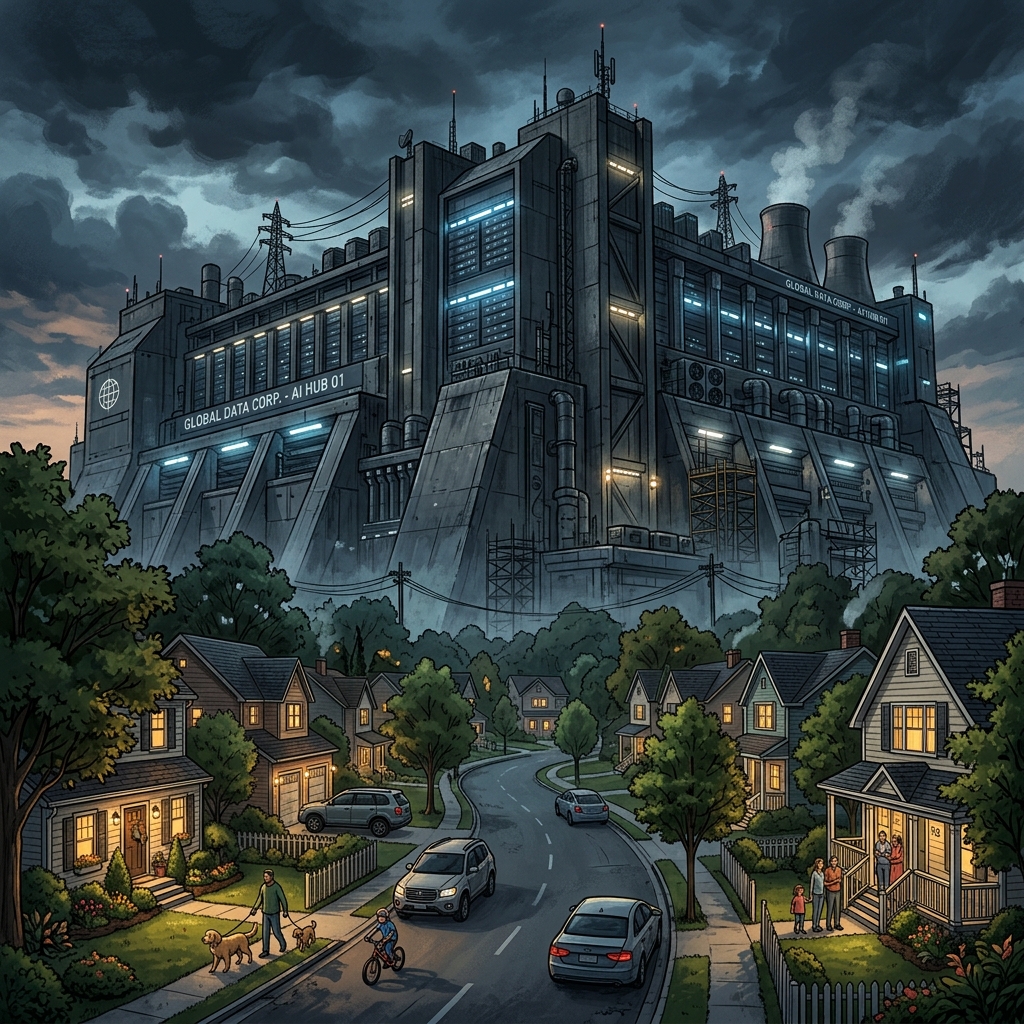
The third, and perhaps most significant reason, is the true cost to local communities. The scale of these projects is baffling. In Virginia, residents are dealing with the exhaust gases of thousands of diesel generators. In Utah, a proposed AI data center would have expelled the heat equivalent of 23 atomic bombs into the surrounding valley every day, leading to immediate public outrage. Data centers are projected to use as much water as 1.3 billion people by 2030, raising severe concerns about chemical contaminants and cooling system runoffs.
The Community Backlash
The data centers that did get built have left a trail of grievances. Residents living near facilities report a persistent, low frequency hum from cooling systems that vibrates through walls and disrupts sleep. Homeowners have spent hundreds of thousands of dollars on insulation with little relief.
Furthermore, local residents are footing the bill for the massive electricity demand. One utility company raised rates six times in a two year period, resulting in a 24% jump for ordinary consumers. Bills have skyrocketed, placing an unbearable burden on households.
Naturally, this has led to fierce opposition. Data center cancellations due to local pushback quadrupled in a single year. States are now taking legislative action. Maine recently became the first US state to pass a statewide ban on new data center construction until late 2027, and over a dozen other states are considering similar measures.
Financial Fragility and the Bubble
The hyperscalers have largely exhausted their cash reserves and are now borrowing heavily. They are effectively net debtors spending huge volumes of money on infrastructure without guaranteed profits. This realization is gradually dawning on investors.
The financial metrics are alarming. Tens of billions in data center bonds were issued recently, mostly rated as safe investments. However, these supposedly safe bonds are paying interest rates typical of high risk junk bonds, implying a level of risk that credit ratings have not yet fully acknowledged. The entire buildout assumed infinite grid capacity, infinite supply chains, and infinite community patience. None of those assumptions have held true.
Even massive flagship projects backed by prominent political figures have stalled or collapsed entirely due to an inability to secure anchor tenants and unmanageable supply chain issues. If compute capacity remains constrained by local bans and hardware shortages, companies face a hard growth ceiling.
Are There Alternatives?
Do we even need massive, centralized data centers to reap the benefits of AI?
Alternative, more sustainable methods are being explored. Subsea data centers, which deploy capsules on the ocean floor, use naturally cold seawater for passive cooling. This drastically increases efficiency, directing nearly all electricity toward computing rather than air conditioning.
Additionally, local AI models are becoming far more capable. Instead of relying on a billion dollar facility for every prompt, users can run highly efficient, smaller models locally on personal devices. If a local model can handle 80% of daily tasks efficiently, the demand for sprawling, centralized infrastructure could drop significantly.
Conclusion
We have always needed data centers, and they are not going away. They quietly run everything from global banking to streaming services. The question is not whether we should build them, but how they are built, where they are placed, and whether the sheer volume currently planned is justified by the actual return on investment.
If the current model requires raising electricity prices for hardworking communities just so a user can generate an instant image or draft an email, the tradeoff seems fundamentally flawed. AI has the potential to be revolutionary in fields like medicine, materials science, and logistics. But to achieve that potential, the infrastructure supporting it must be sustainable, financially sound, and respectful of the communities it inhabits. Right now, it is struggling to be any of those things.
Credits
This post is inspired by and adapted from the original video essay by ColdFusion on YouTube. You can support their work and watch the full breakdown on their channel.
Connect With Me
- GitHub: @amitdevx
- LinkedIn: Amit Divekar
- X / Twitter: @amitdevx_
- Instagram: @amitdevx
If you have any questions or want to discuss this topic further, feel free to reach out!